
Indian Oil Corporation Ltd (IOCL) plans to invest approximately Rs 1 trillion in petrochemical projects over the next five to six years, aiming to significantly increase its petrochemical intensity and production capacity to meet growing domestic demand.

'If crude remains above $100 per barrel, with restricted retail-price increases, OMCs could face negative petrol and diesel marketing margins, higher LPG under-recoveries, higher crude-landing, freight and insurance costs, working capital and debt accumulation and inventory losses if crude subsequently corrects sharply.'
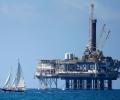
State-run Oil and Natural Gas Corporation (ONGC) Ltd reported a 112 per cent year-on-year increase in standalone net profit for Q1 FY27, reaching 17,034 crore, primarily due to higher crude oil prices and increased realisations from new well gas. Despite a consolidated net profit decline due to HPCL's losses, ONGC's core upstream business showed robust growth.

A major fire near the main unit of the newly built Rajasthan refinery of HPCL has postponed the inauguration by Prime Minister Narendra Modi. The fire, which broke out near the crude distillation unit, was doused in about two hours with no reported casualties.

Of the 1.32 trillion capex target for FY26, State-run oil firms have already spent 1.07 trillion in the first 10 months.

India may have to lean more on West Asian nations for supplies of liquefied petroleum gas (LPG), a cooking fuel, in the coming years after Indian state-run refiners drew up big plans to diversify into producing more profitable petrochemicals. This shift leads to reduced LPG output, Indian refining executives said. The mantra for state-run oil companies, from Indian Oil Corporation (IndianOil) to liquefied natural gas (LNG) importer Petronet LNG, which are looking to diversify their businesses from lower-margin fuels, has been value-added petrochemicals.

The Indian government has directed oil refineries to increase LPG production to ensure a stable supply of domestic cooking gas, amidst concerns over potential disruptions from the escalating Middle East conflict and its impact on imports.

Despite international crude oil rates crossing USD 100 per barrel due to Middle East tensions, the Indian government plans to maintain current petrol and diesel prices, ensuring uninterrupted fuel supply across the country.
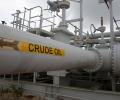
India will restrict crude oil purchases from Russia as part of an agreement reached with the US in exchange for lower trade tariffs, sources said, adding imports will continue for now by refiners such as Nayara Energy, which have no other alternative source. US President Donald Trump announced overnight that the United States will cut the reciprocal tariff on imports of Indian goods to 18 per cent from 25 per cent under a broader bilateral understanding.

India is set to reduce its direct imports of Russian crude from late November, following new US sanctions on Rosneft and Lukoil, effective November 21.
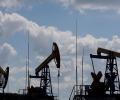
US sanctions against two of Russia's largest oil companies are expected to impact Reliance Industries' crude imports from Russia, while state-run refiners may continue purchases through intermediary traders for now.

Oil marketing companies (OMCs), paint manufacturers, tyre producers, and aviation stocks witnessed significant gains as Brent crude oil prices slipped below $70 per barrel. The price drop came after a double blow: The US imposed tariffs on Canada and Mexico, including energy imports, and OPEC+ - the group of major oil-producing nations including Russia - announced an output increase of 138,000 barrels per day, the first such hike since 2022.

Public sector Hindustan Petroleum Corporation is planning to invest $1.5 billion in its petrochemical complex project, featuring refinery, naphtha cracker and aromatic plant.
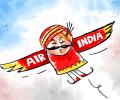
With the new owner shelling out Rs 18,000 crore for the buyout of 'Maharaja' this would be the highest ever amount garnered through privatisation or even the cumulative sum garnered through strategic sale in 1999-00 to 2003-04. The government had garnered roughly over Rs 5,000 crore during that five-year period by privatising 10 CPSEs.
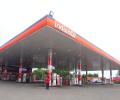
Indian Oil Corporation (IOC) on Tuesday reported halving of its March quarter net profit largely because of losses in the petrochemical business and shrinking margin after it announced a pre-election fuel price cut despite rising input costs. The net profit of Rs 4,837.69 crore in January-March compared to Rs 10,058.69 crore a year back and Rs 8,063.39 crore in the preceding October-December quarter, according to a stock exchange filing by the company.

After a hiatus of nearly two decades, the government's programme to privatise state-owned firms restarted with the handing over of debt-laden national carrier Air India to the Tata Group. With the new owner shelling out Rs 18,000 crore for the buyout of the 'Maharaja', this would be the highest-ever amount garnered through privatisation, and is even more than the cumulative sum mopped up through strategic sales from 1999-00 to 2003-04. The government had in October last year inked the share purchase agreement with the Tata Group for sale of national carrier Air India for Rs 18,000 crore. Tatas would pay Rs 2,700 crore cash and take over Rs 15,300 crore of the airline's debt.

To prevent rise in air pollution levels, oil marketing companies and thermal power units were planning to procure stubble from farmers to make bioethanol and promote the central government's 'Agricultural Mechanization' for crop residue management. But both have seen minimal success.
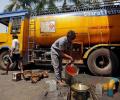
After a spike in crude oil and gas prices in October following the Hamas terror attack, prices eased down 9 per cent month-on-month in November. The Organization of the Petroleum Exporting Countries (Opec) and Opec+ agreed to a further voluntary production cut in January-March 2024 to try and support global crude prices. The best guess here is that crude prices (currently at $75/barrel, or bbl) will not likely cross significantly above $80, and gas prices are also likely to remain subdued unless there's a further escalation in the Israel-Hamas conflict.
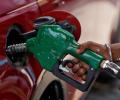
The market responded positively to the Q1 results of oil marketing companies (OMCs), Bharat Petroleum Corporation (BPCL) and Hindustan Petroleum Corporation (HPCL) despite numbers being weaker than consensus. BPCL's reported gross refining margin (GRM) was in line at $7.9 per barrel (bbl) in Q1FY25, which implies marketing margin stood at Rs 4.8 per litre. Standalone profit after tax or PAT at Rs 3,000 crore was down versus consensus due to under-recoveries in LPG business.

State-owned oil firms such as ONGC and IOC will invest over Rs 1.11 lakh crore in the next fiscal year starting April as they supplement the government's massive spending programme to spur economic growth. Oil and Natural Gas Corporation (ONGC), Indian Oil Corporation (IOC), GAIL (India) Ltd, Bharat Petroleum Corporation Ltd (BPCL), Hindustan Petroleum Corporation Ltd (HPCL) and Oil India Ltd (OIL) will together make a 7.4 per cent higher capital expenditure in the 2022-23 fiscal (FY23). The capex spending of Rs 1.11 lakh crore in 2022-23 compares with a revised estimate of Rs 1.04 lakh crore for the current fiscal year that ends in March, according to Union budget documents.

Russian energy giant Rosneft has appointed a former Indian Oil Corporation (IOC) director to its board in signs it may be looking at boosting trade links with India. G K Satish, who retired as director for business development at IOC in 2021, is one of the three new faces appointed to the 11-strong board of directors of Rosneft, according to a statement issued by the Russian firm. Satish, 62, is the first Indian to be appointed to the board of Rosneft.

Public-sector enterprise stocks have seen a good run thus far in 2023-24 (FY24), with the S&P BSE PSU Index surging by over 26 per cent during the period, compared to an 11 per cent increase in the benchmark S&P BSE Sensex.
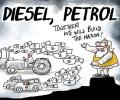
Petrol and diesel prices are unlikely to be increased despite firming raw material costs because of upcoming general elections next year, Moody's Investors Service said. Three state-owned fuel retailers -- Indian Oil Corporation (IOC), Bharat Petroleum Corporation Ltd (BPCL) and Hindustan Petroleum Corporation Ltd (HPCL) -- which control roughly 90 per cent of the market, have kept petrol and diesel prices on freeze for a record 18 months in a row. This is despite the raw material (crude oil) cost surging last year, leading to heavy losses in first half of 2022-23 fiscal year before easing oil prices propelled them to profitability.

Nirma's tryst with the pharmaceutical space started in 2006 when it acquired the ailing Core Healthcare in a deal reported to be worth Rs 300 crore. The Ahmedabad-based manufacturer of intravenous fluids was subsequently renamed Nirlife. Pharma industry insiders say Nirma, which broke open the detergent market in the 1990s with low prices and massive advertising, tried an encore of the low-price strategy in pharma, but with mixed results.
Villager are treating the project as a 'golden goose' and are demanding huge compensation for their land.

Corporate earnings grew in double digits during the April-June 2022 (Q1FY23) quarter but the momentum waned. Overall corporate earnings in the quarter were down sharply from their highs in FY22. The combined net profit of 2,981 listed companies across sectors in the Business Standard sample was up 22.4 per cent YoY to Rs 2.24 trillion in the June quarter, driven by a big jump in the earnings of banks, non-banking lenders, oil & producers, and FMCG companies. Also, earnings in the corresponding quarter a year ago were affected because of the second wave of the Covid pandemic, even though the numbers were a lot better than Q1FY21 when there was a nationwide lockdown.

There are 30 listed PSUs in which the public holding is less than 25%.

India's plan to produce ethanol from second-generation (2G) sources -- mainly farm waste -- is taking time to materialise even as the government is set to dedicate to the nation on Wednesday a Rs 900-crore plant set up by Indian Oil Corporation (IOC) in Panipat. Though state-run oil companies had decided to set up at least 12 plants in 2016-17 with an investment of around Rs 10,000 crore, this will be the first unit coming on track while others are stuck in various stages owing to issues like capital expenditure, lack of feedstock, and high rates of finished products compared to traditional ethanol units. According to industry sources, three more second-generation plants are coming up.
Engineering conglomerate fended off three corporate raids but emerged stronger.
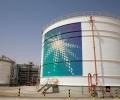
Estimated to cost $44 billion, the project was expected to be commissioned by 2025.
ONGC will submit a proposal to the Union government for acquiring Hindustan Petroleum Corporation Ltd's entire 16.97% stake in Mangalore Refinery & Petrochemicals Ltd at Rs 37.75 per share even though HPCL is not keen to divest its holding.
Oil and Natural Gas Corporation is likely to buy 16.95 per cent stake of Hindustan Petroleum Corporation Ltd in Mangalore Refinery and Petrochemicals Ltd for about Rs 550 crore.
